
Understanding Thermal Inkjet Printer
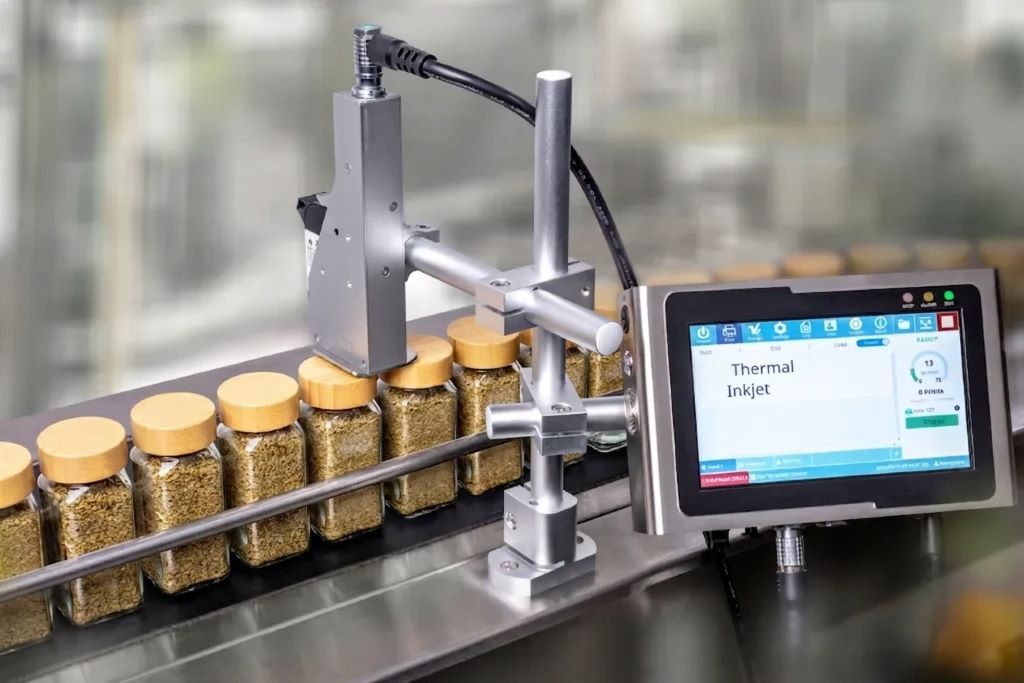
Thermal Inkjet (TIJ) is a sophisticated, non-contact digital printing technology that leverages the precision of heat to deposit ink onto a wide variety of materials. Widely favored for its reliability, speed, and high-resolution output, TIJ has become a cornerstone technology in both office document printing and high-speed industrial coding and marking applications.
This mechanism allows for exceptional print quality and high-speed operation, while the design of the system—which typically integrates the printhead into the disposable ink cartridge—virtually eliminates the need for complex, time-consuming maintenance, as every ink change effectively refreshes the printhead.
Key Advantages of
TIJ systems are highly favoured across multiple industries due to several distinct benefits
High Resolution and Print Quality
Because the nozzles can be manufactured at a microscopic scale using semiconductor fabrication techniques, TIJ printers can achieve incredibly high resolutions (often 600 DPI or higher). This makes them excellent for sharp text, intricate barcodes, and detailed graphics.
Low Maintenance and High Reliability
In many TIJ designs (especially industrial ones), the printhead is integrated directly into the ink cartridge. Every time you replace an empty cartridge, you get a brand-new printhead. This virtually eliminates the risk of permanent nozzle clogging.
Compact and Cost-Effective
TIJ printers have fewer moving parts and do not require complex ink delivery pumps, making the machines smaller, cheaper to manufacture, and incredibly easy to operate.
High Speed
The heating and cooling cycle happens thousands of times per second per nozzle, allowing industrial TIJ printers to maintain crisp print quality even on fast-moving factory production lines.
Common Applications
Because the technology is so adaptable, you will find TIJ printers in two primary sectors:
- Consumer and Office Printing
Most standard desktop color printers use thermal inkjet technology to handle everyday document printing, high-quality photo printing, and scanning combos.
- Industrial Coding and Marking
In manufacturing, TIJ printers are mounted on conveyor belts to print variable data directly onto products and packaging. Common examples include:
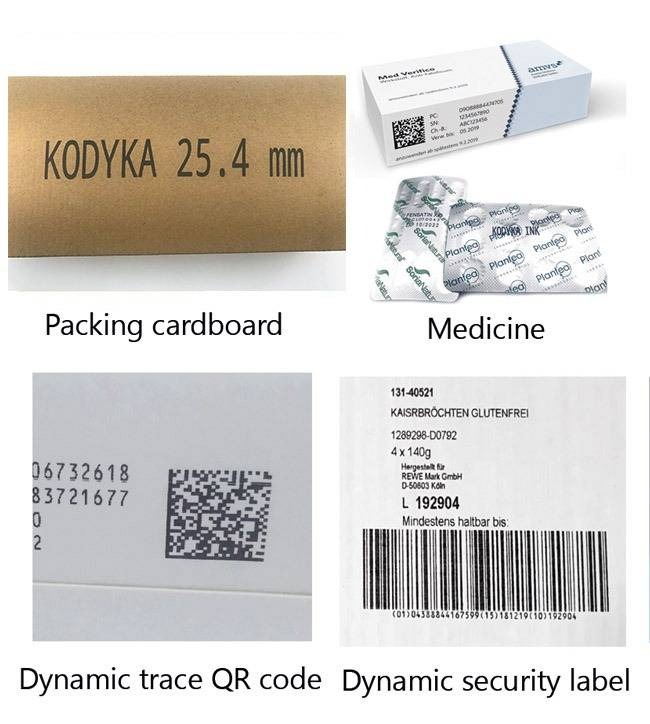
- Food & Beverage: Expiry dates, lot numbers, and batch codes on milk cartons, plastic bottles, and snack bags.
- Pharmaceuticals: Track-and-trace 2D DataMatrix codes on medicine boxes to prevent counterfeiting.
- Logistics: High-resolution barcodes and shipping data on corrugated cardboard boxes.
Print Heads
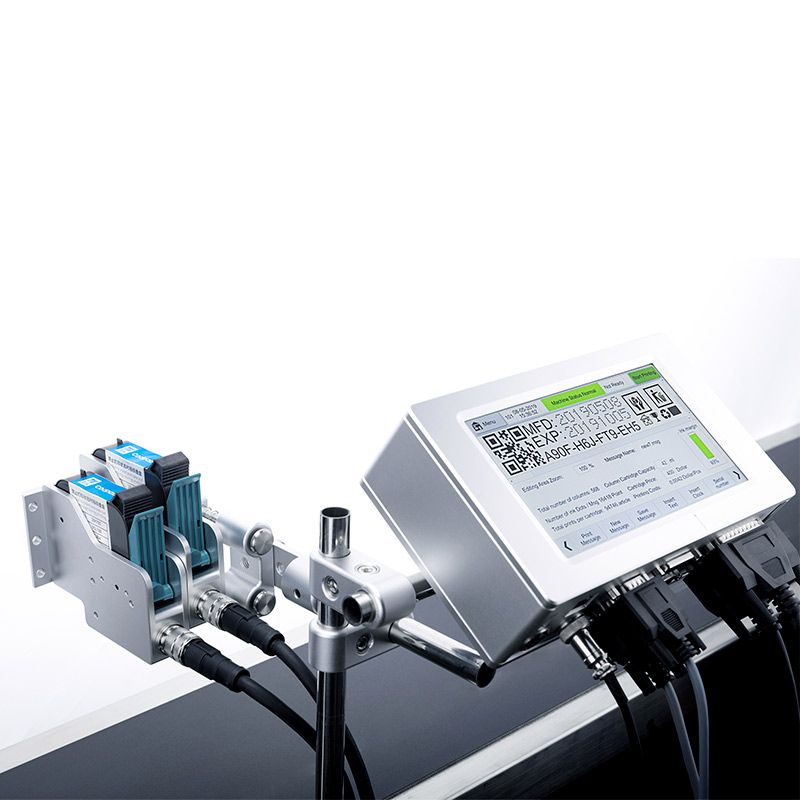
We can integrate as per customer’s requirement of 1 print head to 4 print head , individual printer installation or
stitched print head installation. We have two options in print head 12.5mm Print Head and 25mm Print Head. Installations are done
as per the customers requirement.
Printhead Stitching for Larger Images
A single standard TIJ cartridge usually gives you a print height maximum of 12.7 mm (0.5 inches). If your logo or image is larger than this, you can “stitch” or stack multiple printheads together. For example:
- Two stacked heads give you a 4 mm (25 mm) print height.
- Four stacked heads give you a 8 mm (50 mm) print height, allowing for large brand logos and intricate warning illustrations.
TIJ printers require a very close print gap. The printhead needs to be positioned 1 mm to 3 mm away from the carton or pouch.
- For Cartons: Ensure the boxes are guided tightly on the conveyor so they don’t wobble or drift away from the printhead.
- For Pouches: Pouches can be tricky because they are flexible and wrinkly when filled. It is highly recommended to print on pouches while they are still flat (empty) using a specialized friction feeder before they reach the filling station.
- Zero Dry Time: Since the ink transfers as a solid-to-solid matrix via heat, there is absolutely no liquid solvent to evaporate. Products can be packed, stacked, or boxed immediately after printing without risking smears.
- Large Print Area: Unlike standard TIJ cartridges which are often limited to 12.7 mm in height, TTO printheads can easily print large areas—frequently up to 53 mm or 128 mm This makes them perfect for printing full ingredients lists, nutrition facts panels, and large warning graphics.
TTO vs. TIJ: Which is better for Pouches and Cartons
If you are choosing between a Thermal Inkjet (TIJ) and a Thermal Transfer Overprinter (TTO), the choice usually comes
down to your packaging material and production line setup
| Feature | Thermal Inkjet (TIJ) | Thermal Transfer Overprinter (TTO) |
|---|---|---|
| Contact Type | Non-contact (Sprays ink across a 1–3 mm gap) | Direct mechanical contact (Presses ribbon onto film) |
| Best Substrate | Excellent for paperboard, cartons, and flat pouches | Exclusively designed for flexible films, foils, and plastics |
| Print Height | Usually modular/small (12.7 mm per head) | Wide print areas (53 mm to 128 mm+) |
| Consumables | Liquid ink cartridges (Water or solvent-based) | Dry thermal ribbon rolls |
| Line Integration | Easily retrofitted onto almost any moving conveyor | Requires integration with packaging machinery and film transport systems |